Serving San Jacinto, CA and surrounding areas. (951) 474-1097
A slab that does not account for San Jacinto clay soils and seismic risk will crack within a few years. Get a foundation built correctly from the ground up.
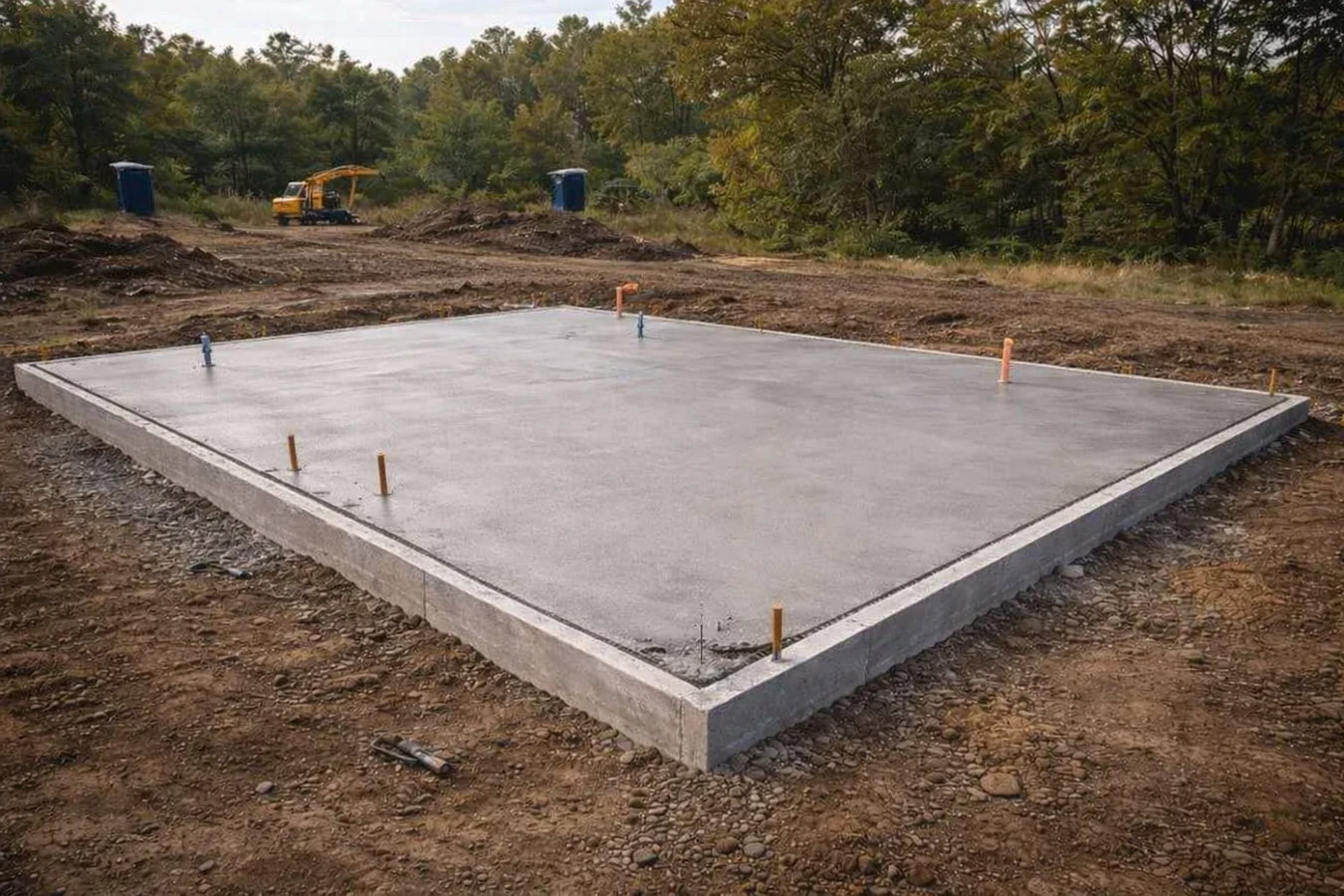
Slab foundation building in San Jacinto means grading and compacting the ground, laying a moisture barrier and steel reinforcement, then pouring a concrete pad that serves as both the floor and structural base of your home. Most residential slabs take one to three active days on-site, with a 28-day curing period before full strength is reached.
A slab is the most common foundation type in Southern California because the climate is dry and the ground rarely freezes. But the clay soils under most San Jacinto properties make local conditions more demanding than other parts of the state. If you are also planning structural work above ground, our concrete footings service handles the deep-edge reinforcement that carries the weight of your walls and roof down into stable ground.
Some situations are clear-cut. Others develop slowly. Here are the most common signals.
The most straightforward situation is a planned home, ADU, or large addition on a lot that has no existing foundation. In San Jacinto, where accessory dwelling units are increasingly common, this is one of the most frequent reasons homeowners contact us. Without a permitted slab, framing cannot legally begin.
Small hairline cracks in a slab are common and usually harmless. But cracks wide enough to slip a pencil into - or diagonal cracks running from doorway corners - are a sign the slab has moved significantly. In the San Jacinto Valley, this often traces back to expansive clay soil that swells in wet winters and contracts in dry summers.
When a slab shifts, the walls above it shift too. Doors that once closed easily and now stick, or window frames that show daylight at the edges, are early signs of foundation movement. This symptom is especially common after a wet winter followed by a dry summer - the clay soil expands and then contracts, rocking the slab beneath.
If a marble rolls consistently toward one wall, or you can feel a noticeable slope walking through a room, the slab may have settled unevenly. Sometimes a section can be lifted and stabilized, but in more serious cases a full new slab is the more cost-effective long-term solution. A licensed contractor can tell you which situation you are in.
We handle new slab foundations from the first site visit through permit closeout. That includes soil assessment, grading, moisture barrier placement, steel reinforcement layout, the pour itself, and final inspection coordination with the City of San Jacinto. For ADUs and room additions, we size the slab and footing design to meet city requirements for habitable space. If your project also needs full structural foundation work, our foundation installation service covers complete residential and commercial foundation systems.
Every slab we pour includes proper control joints - planned cut lines that give the concrete a place to flex without random cracking. In San Jacinto, where clay soil moves seasonally and seismic activity is a real factor, this detail matters. We also account for any plumbing that needs to run through the slab before the pour, because changes afterward are expensive. You get a written, itemized quote before any work starts so there are no surprises on the final invoice.
Built for homes, ADUs, and room additions in San Jacinto and surrounding areas.
For new construction where drain lines and cleanouts run through the foundation.
Removes the failing existing slab and replaces it with a properly prepared new pour.
Sized and permitted for accessory dwelling units under California and city guidelines.
The San Jacinto Valley sits on clay-heavy soils that swell when wet and shrink when dry. That seasonal movement puts stress on any slab that was not specifically designed for it. A contractor who works here regularly knows to test soil conditions, adjust footing depths, and add compacted fill before pouring - steps that are easy to skip but show up as cracks within a few years. San Jacinto also sits near the San Jacinto Fault Zone, one of the most active fault systems in California. The permit inspection process verifies that steel placement meets seismic requirements before any concrete goes in - which is your main protection against a slab that fails in an earthquake. Homeowners in Beaumont face similar soil and seismic conditions, as do those in Banning, and we apply the same standards across all our service areas.
Hot, dry summers are the other major local factor. Concrete poured in 100-degree heat without the right precautions dries too fast, producing a weaker slab that cracks sooner. We schedule pours for early morning during peak summer months and use curing compounds or wet covers to slow moisture loss. San Jacinto has been one of the faster-growing cities in the Inland Empire, which means contractors here stay busy - especially in spring and fall, so choosing a reliable concrete slab contractor early makes a real difference. Planning your project four to six weeks ahead, including time for permit processing, gives your project the best chance of staying on schedule. You can check contractor licensing yourself at the California Contractors State License Board.
We respond within one business day and schedule a visit to your property. We need to see the lot, check soil conditions, and assess access for concrete trucks before giving you an accurate number. Expect a written quote within a few days.
We submit the permit application to the City of San Jacinto Building Division. This typically takes one to two weeks. You do not need to visit the permit office - we manage this step entirely on your behalf.
We grade, compact, and form the slab area, then place steel reinforcement. A city inspector reviews the steel layout before any concrete is ordered. This inspection cannot be skipped - it is your independent verification the work is done right.
Concrete trucks arrive, usually at first light in summer. The pour takes a few hours. After curing - at least seven days before framing, 28 days for full strength - the city conducts a final inspection and we walk the finished slab with you.
We visit your lot, assess the soil, and give you a written estimate. No obligation, no pressure - just an honest look at what your project needs.
(951) 474-1097The San Jacinto Valley's expansive clay soils require specific foundation design decisions - footing depth, steel layout, base preparation. We work in this soil every week and we account for it in every quote and every pour. You are not getting a generic plan applied to a local problem.
Our California C-8 Concrete Contractor license means the state has verified our qualifications and we carry the required bonding and insurance. You can look up any contractor's license number on the CSLB website in under a minute - we encourage you to check ours before signing anything.
We pull the building permit and coordinate all required inspections with the City of San Jacinto. Riverside County projects outside city limits are also handled. You do not need to track deadlines or visit the building department. The closed-out permit documentation comes with the finished project.
San Jacinto regularly hits 100 degrees from June through September. We schedule all summer foundation pours to start before 7 a.m. and use curing compounds to protect the slab while it gains strength. The result is a foundation as strong as one poured in ideal conditions.
Every slab foundation we build goes through the city permit process - which means independent inspections at the moments that matter most. When you hire us, you get documented proof the foundation was built correctly, not just our word for it.
For California building requirements, see the California Building Standards Commission. For concrete standards and best practices, the American Concrete Institute is the leading authority.
Full foundation systems for homes and structures that require engineering review and complete structural concrete work.
Learn moreDeep-edge reinforcement beneath slabs and walls that transfers structural loads down into stable soil.
Learn moreConcrete contractors in the Inland Empire book up fast in spring and fall - lock in your estimate now before the schedule fills.