Serving San Jacinto, CA and surrounding areas. (951) 474-1097
Planning a deck, addition, retaining wall, or patio cover in San Jacinto? We pour concrete footings sized for the valley's shifting soils and California's seismic requirements - permitted, inspected, and done before any structure goes up.
Concrete footings in San Jacinto involve digging to the required depth for local soil and seismic conditions, setting steel reinforcement, pouring the concrete after a city pre-pour inspection, and curing the footing before any structure is built above it - most residential footing jobs take one to two days of active work, with permit approval adding a few days to a couple of weeks beforehand.
A footing is the underground base that holds up everything built above it - a deck, a room addition, a retaining wall, a fence post, or a patio cover. If the footing is undersized, poured in unstable soil, or skips the permit inspection, the structure above it will eventually move, crack, or fail. In San Jacinto, where alluvial soils shift and California's seismic requirements add an extra layer of design criteria, getting the footing right at the start saves you from expensive problems later. Many homeowners tie footing work into larger projects like foundation installation when the scope calls for it.
The American Concrete Institute sets the standards for how footings are designed, reinforced, and cured - following those standards is especially important in high-seismic areas like the San Jacinto Valley, where a footing is the last line of defense against ground movement damaging a structure above it.
When a footing shifts or settles unevenly, the structure above it moves too - and diagonal cracks at the corners of door frames or window frames are often the first visible sign. These are not cosmetic issues. If you are seeing this pattern in more than one spot, the problem is happening below grade and getting worse with each season.
A sticky door in July can be wood expanding in the heat - but if doors and windows are sticking in every season, or the problem has gotten noticeably worse over the past year, that can indicate a footing or foundation that has shifted. A contractor can quickly tell you whether you are looking at a soil issue or something simpler.
A visible gap forming between your house and an attached porch, patio, or garage floor means the slab's footing has allowed it to move independently from the house. In San Jacinto, the valley's sandy and alluvial soils can accelerate this kind of separation, especially after a wet winter followed by a long dry summer.
A retaining wall starting to lean forward or showing horizontal cracks near the base is telling you its footing is no longer holding. In San Jacinto's hillside neighborhoods, where soil movement after rain is common, these walls can fail completely once they reach that point - and the repair cost climbs significantly.
We pour footings for the full range of residential projects: deck posts, patio covers, room additions, retaining walls, fences, and accessory dwelling units. Every project includes a site assessment to evaluate the soil, a permit application with the City of San Jacinto, the excavation and forming work, steel rebar placed to California's seismic specifications, a pre-pour inspection scheduled with the city, and the concrete pour itself with a proper curing protocol for local climate conditions. For projects where new footings connect to an existing structure, we assess the existing foundation during our site visit and flag any issues before work begins - older homes in San Jacinto sometimes have foundation work that does not meet current standards, and knowing that upfront prevents surprises mid-project. We also coordinate footing work with related services like foundation installation and foundation raising so the structural base of a larger project is handled together.
For commercial or larger-scale residential projects, we can bring in additional engineering resources when the footing design requires it. If you are adding a structure and a contractor you spoke with has not mentioned footings yet, ask directly - in San Jacinto, where seismic requirements apply, every new structure that goes into the ground needs them.
Suits homeowners adding an outdoor structure - sized for the load, permitted, and inspected before the deck framing begins.
For homeowners expanding their living space - deeper, wider footings that meet current seismic standards and tie correctly into the existing foundation.
The buried base that holds any retaining wall in place - especially important in the valley where clay and sandy soils move with the seasons.
The San Jacinto Valley sits on a mix of alluvial and sandy soils that behave very differently from one property to the next. Soils that look stable on the surface can shift significantly when they absorb water in winter and dry out in summer - and that movement puts constant stress on any footing sitting in them. California's seismic requirements add another layer: because San Jacinto is near one of the most active fault systems in the state, footings here need more reinforcing steel and a different placement pattern than footings built in lower-risk parts of California. A contractor who uses a one-size approach regardless of location is not accounting for either of these realities.
Hot summers also affect how footing concrete has to be handled. Pours scheduled for midday in July without curing protocols produce weaker footings than the same mix poured correctly in the morning with moisture control during the curing period. This is standard knowledge for contractors working in the Inland Empire, but it is easy to miss for someone based elsewhere. Homeowners in nearby Beaumont and Banning deal with the same soil conditions and summer heat as San Jacinto - which is why we apply the same site assessment and hot-weather protocols across all of our Inland Empire projects.
We respond within 1 business day and schedule a free visit to your property. We walk the area, assess the soil, and discuss the permit process - then provide a written quote covering digging, forming, the concrete pour, and any rebar required. No guesswork.
We submit the permit application to the City of San Jacinto's Building and Safety Division and keep you updated on the timeline. Simple projects may be approved in days; larger jobs can take a couple of weeks. We handle all the paperwork so you do not have to.
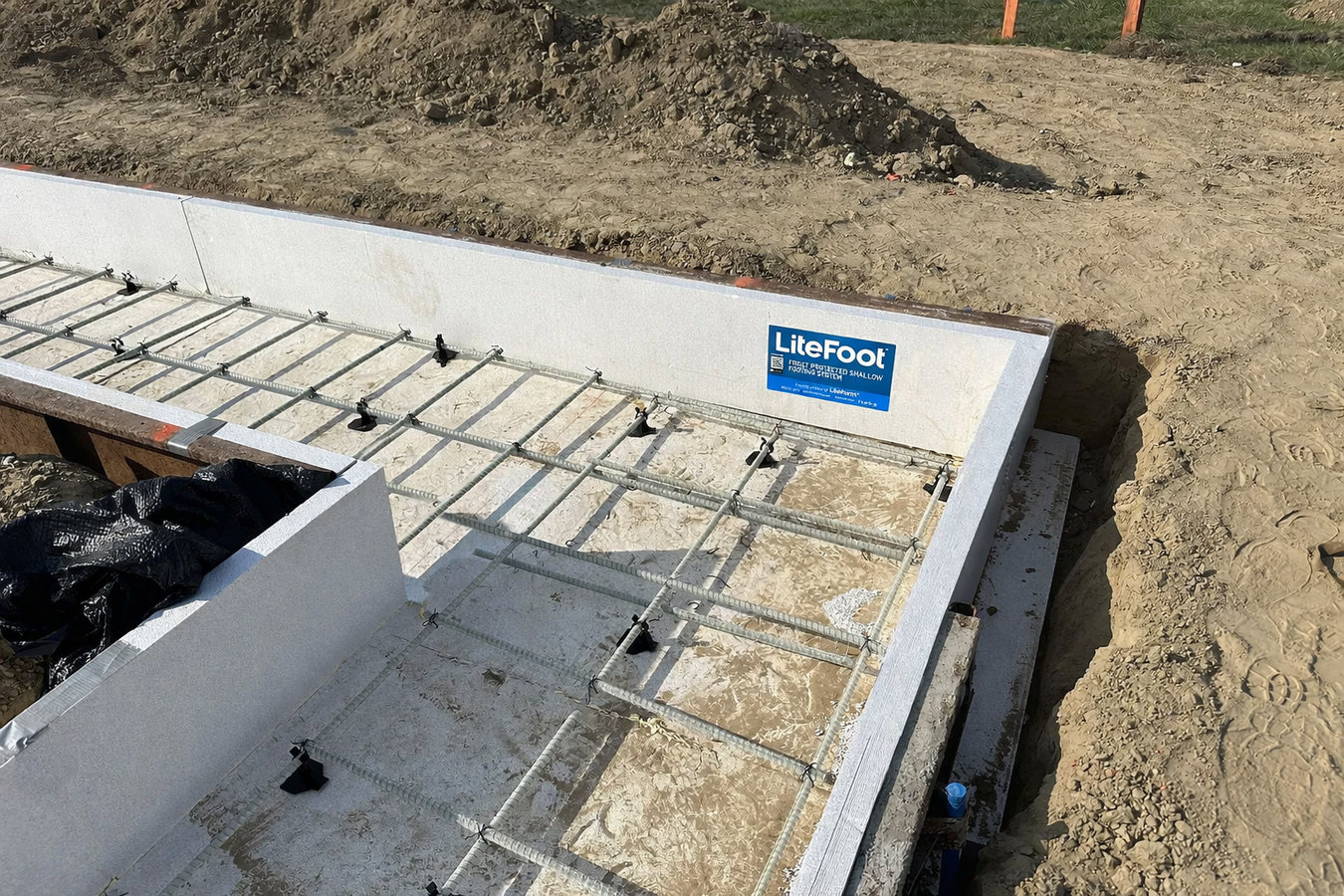
The crew digs the footing trenches to the required depth, sets up forming, and places the steel reinforcing bars. Before any concrete is poured, a city inspector checks that everything is correct. This independent check protects you before the work gets buried underground.
We schedule the pour for early morning in summer to avoid peak heat. After the pour, we apply curing protocols to keep the concrete moist and strong during the critical first days. We let you know exactly when the footing is ready for the next phase of your project.
We respond within 1 business day and come to your property before quoting a number - no guesswork, no surprises, no obligation.
(951) 474-1097We pull every required permit from the City of San Jacinto's Building and Safety Division and schedule the required pre-pour inspection. Your footings are documented and confirmed correct before concrete goes in.
The San Jacinto Valley's alluvial soils are not uniform - what is under your backyard may be very different from what is under your neighbor's. We assess actual ground conditions at your site before digging a single inch, so footing depth and width are sized for what is really there.
San Jacinto sits near the San Jacinto Fault, one of California's most active seismic zones. Every footing we pour meets California's seismic requirements - with the right rebar sizing and placement to handle ground movement, confirmed by the city inspector before the pour.
San Jacinto Concrete Company has completed footing projects throughout San Jacinto and 11 surrounding Inland Empire cities. We know the local soil conditions, seismic requirements, and summer heat protocols because this is where we work every week.
Every footing we pour in San Jacinto is permitted through the City of San Jacinto Building and Safety Division and inspected before concrete goes in. That independent verification means your project is documented, correct, and protected from the start.
When an existing foundation or slab has shifted, raising and re-leveling it starts with evaluating and reinforcing the footings below.
Learn moreFull foundation builds for ADUs, room additions, and new structures - where the footing work is the first and most critical phase.
Learn moreSummer heat means early-morning pour slots fill up fast - call or message us today to lock in your project timeline before the season gets busy.