Serving San Jacinto, CA and surrounding areas. (951) 474-1097
Everything your home stands on depends on the foundation. Get one installed correctly - designed for local clay soils, seismic requirements, and city permits.
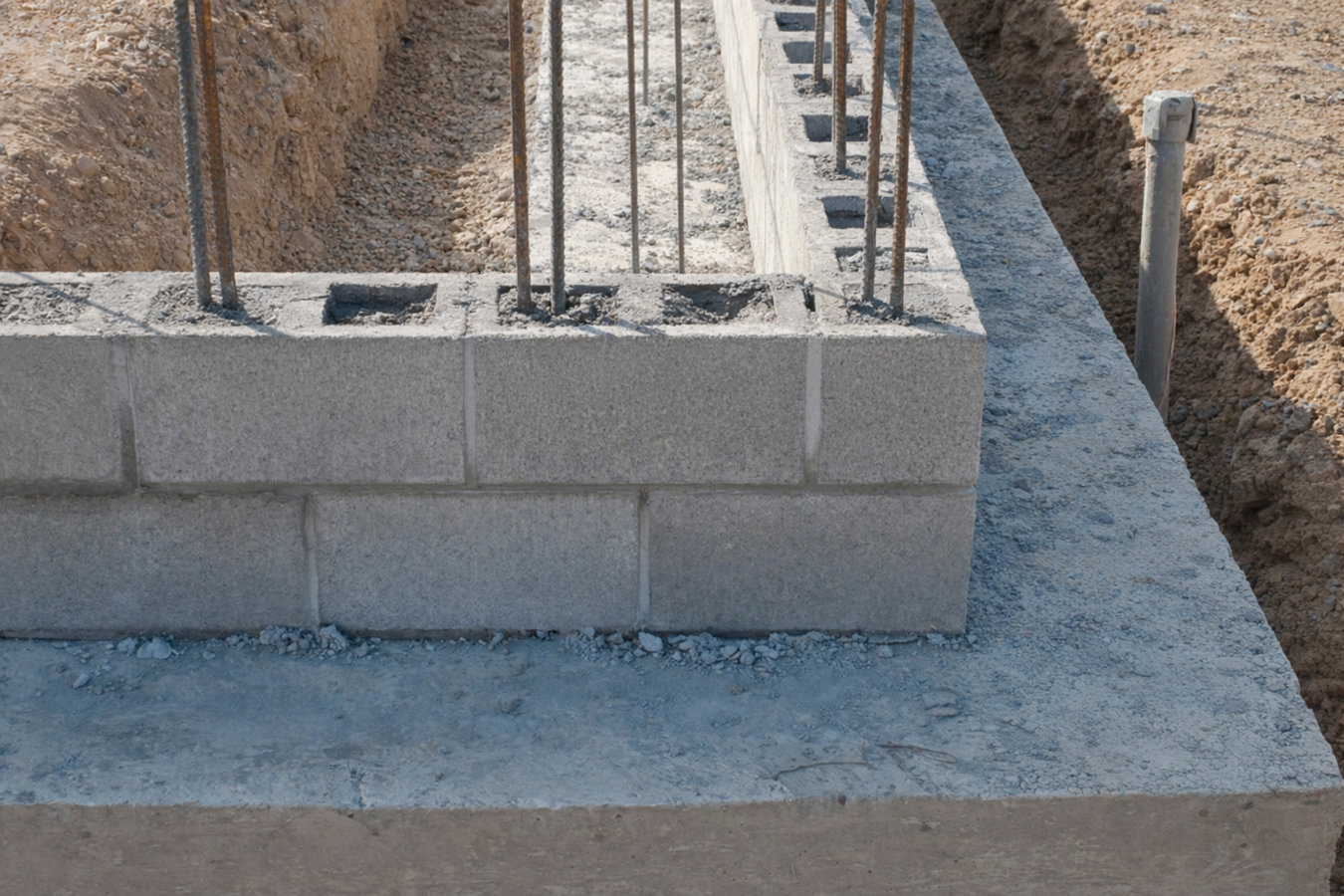
Foundation installation in San Jacinto covers the full scope from soil assessment through final permit sign-off - excavation, grading, steel reinforcement placement, concrete pour, and curing. For a typical single-family home, active construction takes one to two weeks, with framing ready to begin about seven days after the pour.
Slabs are the most common foundation type in Southern California because the dry climate and rare freeze cycles make them practical and cost-effective. But San Jacinto soil conditions and seismic proximity add specific design requirements that not every contractor accounts for. If your project also involves a standalone concrete slab without full structural elements, our slab foundation building service is the right starting point.
Some of these signs appear gradually. Others are sudden. Either way, earlier action is cheaper than waiting.
If doors or windows that used to work smoothly now stick, drag, or leave gaps at the corners, your home's frame may be shifting. This is often the first visible sign that the foundation beneath is moving. In San Jacinto, this symptom is especially common after a wet winter followed by a dry summer - when the clay-heavy soils expand and contract and put uneven pressure on the slab.
Small hairline cracks in drywall are common and usually harmless. But diagonal cracks running from the corners of windows or doors, or cracks wider than a pencil tip, are worth taking seriously. These patterns often indicate one part of the foundation has settled or shifted more than another - a condition that tends to get worse over time.
Cracks in the concrete around the base of your home - especially cracks that are wider at one end, or that run horizontally - are a direct sign the foundation needs attention. In San Jacinto's expansive soil conditions, these cracks can develop within a few years of construction if the original foundation was not designed for local soil movement.
A distinct slope in one direction, or furniture that rocks on what should be a flat surface, are signs the slab has settled unevenly. This is a common issue in older San Jacinto homes built before current soil engineering standards were widely applied. An assessment from a licensed contractor tells you whether repair or replacement is the right call.
We install new foundations for single-family homes, ADUs, commercial structures, and room additions across San Jacinto and Riverside County. Every project starts with a soil assessment - because in the San Jacinto Valley, you cannot design a foundation responsibly without knowing what the ground is going to do. We coordinate with geotechnical engineers when a soil report is required, pull permits from the City of San Jacinto or Riverside County depending on your property location, and manage all inspection scheduling. For projects that also need a new parking structure or commercial hardscape, our concrete parking lot building team handles the site concrete work alongside your foundation scope.
Steel reinforcement is placed according to the approved foundation plan before any concrete is ordered - and the city inspector verifies this before the pour. That pre-pour inspection is your main protection against substandard work getting buried under your home. We use curing blankets and compounds to protect fresh pours during San Jacinto's extreme summer heat, and we do not rush the curing period. A foundation that fails early costs far more to fix than it costs to build correctly.
For homes, ADUs, and multi-unit residential projects requiring full permit and inspection.
Demolishes and replaces a failed or inadequate existing foundation with a properly engineered new one.
Pours new foundation sections that tie structurally to your existing home for room or garage additions.
Heavier steel and engineered designs for commercial structures and multi-story applications.
San Jacinto sits in a valley where clay-heavy soils and proximity to the San Jacinto Fault are the two factors that shape every foundation design decision. Clay soil swells and contracts with moisture - a seasonal movement that puts real stress on concrete over time. A contractor who designs foundations specifically for these soil conditions uses deeper footings, more reinforcing steel, and careful base compaction to reduce that stress. Skipping these steps is one of the most common reasons foundations in this area develop problems within the first few years. San Jacinto has also been one of the faster-growing cities in the Inland Empire - the Soboba Springs and east San Jacinto corridors have seen significant new residential construction, which means local contractors are often in high demand. Plan for four to eight weeks of lead time during busy periods. Homeowners in Banning and Beaumont face similar soil and seismic conditions - we work throughout the region with the same standards.
San Jacinto summers regularly exceed 100 degrees from June through September. That heat is a real risk for freshly poured concrete - if the surface dries too quickly before the concrete has fully cured underneath, the result is cracking and reduced strength. Late fall through early spring is generally the most favorable time for foundation work in this climate, but summer projects can be managed well with early-morning pours and proper curing methods. The City of San Jacinto Community Development Department requires permits and inspections for all foundation work - which is ultimately a protection for you.
We respond within one business day and schedule a site visit. Soil conditions and lot access affect cost, so we need to see the property before quoting. You receive a written estimate that breaks down labor, materials, and permit fees - no vague line items.
For new construction in San Jacinto, a geotechnical soil report is typically required. We coordinate this step and then submit the permit application. Plan review takes one to three weeks. Work does not begin until the permit is posted on your property.
We excavate, grade, and compact the soil, set forms, and place steel reinforcement. A city inspector must approve the steel placement before any concrete is ordered. This mandatory checkpoint is your independent verification the work meets code.
Concrete is delivered and poured, usually in the early morning during summer months. Curing takes at least seven days before framing begins. A final city inspection closes out the permit. We walk you through the finished foundation and hand over all permit documentation.
We visit your lot, review soil conditions if available, and give you a written bid with no obligation. Our calendar fills early in spring - reach out before the season starts.
(951) 474-1097Clay-heavy soils in the San Jacinto Valley require specific decisions - footing depth, steel density, compaction methods. We work in this soil regularly and every foundation we design accounts for the seasonal movement that causes most failures in this area. You are not getting a plan copied from a different region.
Our California C-8 Concrete Contractor license is verifiable at the CSLB website in under a minute. It means the state has confirmed our qualifications and we carry required bonding and insurance. You can also check for any filed complaints - we encourage you to look before signing anything.
We handle every permit application and all required inspections with the City of San Jacinto or Riverside County depending on your address. You receive closed-out permit documentation when the project is complete - documented proof the foundation was independently verified at the critical stages.
San Jacinto hits triple digits for weeks every summer. We schedule summer pours for early morning, use curing blankets, and adjust our mix as needed. A foundation poured in 105-degree heat with the right precautions is as strong as one poured in 70-degree conditions. Without those precautions, it is not.
Every foundation we install goes through the required city permit process, which means independent inspections at the moments that matter most. When the job is done, you hold the paperwork that proves it was built correctly.
For concrete industry standards, visit the American Concrete Institute. Contractor license verification is available at the California Contractors State License Board.
Site concrete for commercial and multi-unit properties that pairs with foundation work on larger projects.
Learn moreResidential slab pours for ADUs, room additions, and new construction where a standalone concrete pad is the starting point.
Learn moreSpring and fall book quickly across the Inland Empire - contact us now to lock in your estimate and get on the schedule.